
Ukraine’s Danube Ports in 2026: Backup Route or Working Option?


Ukraine’s Danube ports in 2026 face a simple question: are Reni and Izmail still a working export route, or a standby corridor kept warm for the next emergency? The numbers point one way, state policy points another — and for cargo owners the answer decides where the box or the bulk parcel actually moves.
- 17.4 Mtthrough Danube ports in 2024
- 8.9 Mtin 2025 — almost half
- ~5 Mtforecast for 2026
The traffic is draining toward the deep-water hub
When the deep-water ports of Greater Odesa came back to life, the Danube lost its reason to be the main door. Throughput on the river fell from 17.4 million tonnes in 2024 to 8.9 million in 2025, and the Ministry of Development now expects roughly 5 million tonnes in 2026. At the peak of the blockade in 2023 the Danube cluster was rated at 35 million tonnes a year, with transshipment up sixfold versus the pre-war baseline.
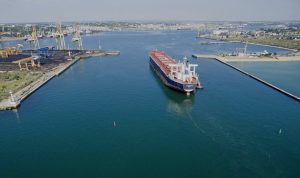
The reason is geometry, not neglect. Reni and Izmail are river ports with shallow drafts and barge-and-feeder logistics; Odesa, Chornomorsk and Pivdennyi take real sea tonnage at 13–19 metres. As soon as the sea hub reopened, agro and bulk flows went back to where the freight-per-tonne is lower. Metal exports in containers, for example, have all but disappeared from the Danube.
Falling volume is not the same as a closed port. Izmail and Reni keep handling export and import cargo every week — the question is price competitiveness, not access.
Why the state is not letting the Danube go quiet
The Ministry of Development’s 2026 plan treats the river as strategic insurance. It wants a single administration for the Danube cluster, the state stevedores turned into modern corporate enterprises, automation and a River Information Service, and tariff incentives for rail haulage to Reni and Izmail. The stated goal is to hold the cluster at no less than 15 million tonnes a year — three times the 2026 forecast.
There is fresh money and steel behind the words. In late June 2026 USPA’s Delta-Pilot branch began operational dredging in the Izmail port water area to restore design depths at the berths, a roughly two-month campaign so vessels can load to fuller drafts. Danube operators are also raising around $35 million for fleet and protective infrastructure.
What it means for your cargo
For most agro and bulk shippers the sea hub is again the cheaper, faster leg, and that is where we route the bulk of cargo transshipment and freight forwarding. But the Danube stays valuable as a second valve — for parcels too small for a panamax, for destinations up the river toward EU ports, and as a fallback if Black Sea security tightens again. The practical move is to keep both options costed in advance rather than discover the river only when you need it. Our team can model both legs against your real volumes and ports of call; see all services or talk to us directly.
Routing cargo through Ukraine’s ports in 2026?
We price the sea hub and the Danube side by side, so you ship on the leg that actually wins on cost and time.
FAQ
Are the Danube ports of Reni and Izmail still open in 2026?
Yes. Both handle export and import cargo. Volumes are falling because the deep-water Odesa hub is cheaper for most flows, not because the river ports are closed.
How much cargo will move through the Danube in 2026?
The Ministry of Development forecasts about 5 million tonnes, down from 8.9 million in 2025 and 17.4 million in 2024.
When does it still make sense to ship via the Danube?
For smaller parcels, destinations along the river toward EU ports, and as a fallback route when Black Sea sea-lane security tightens. For large bulk and container volumes the Odesa hub usually wins on cost.


Leave a Reply