
Port of Constanța: Cargo Turnover Down 28% from Record as Ukrainian Transit Shrinks


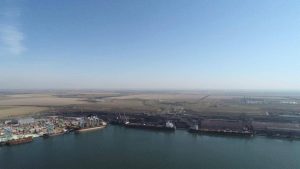
The port of Constanța handled 67 million tonnes of cargo in 2025 — almost 28% below the record 92.6 million tonnes of 2023, when Ukrainian grain transit was filling Romanian berths. Constanța’s cargo turnover has now fallen for a second year in a row, and the data points to one driver above all: Ukrainian exports are loading in Ukrainian ports again.
From record to rollback: the numbers
Figures published by the Constanța Sea Ports Authority and reported by Romania’s Ziarul Financiar show a steady slide:
- 2023 — 92.6 million tonnes, an all-time record;
- 2024 — 77.5 million tonnes;
- 2025 — 67 million tonnes, almost 28% below the peak.
Grain tells the story most clearly: 36 million tonnes in 2023, 26.9 million in 2024, 18.3 million in 2025 — half the record volume gone in two years. The slide continues into 2026: the port administration reported 14.7 million tonnes for the first quarter, 10% below last year, “mainly due to lower volumes of grain and oil products”, with net profit down 27.5%.
Terminal operators feel it too. Constanța South Container Terminal, the country’s largest, closed 2025 with net profit down 28%; ADM România Logistics swung from a 44.5-million-lei profit to a loss.
Where the cargo went
Analysts quoted by ZF name three factors: lower cargo flows, shifting trade routes in the Black Sea and, above all, shrinking transit of Ukrainian agricultural products. The mirror image sits on our side of the border: in the first week of July, 91% of Ukraine’s rail grain exports moved to its own seaports, and not a single grain wagon crossed into Romania.
For a cargo owner the difference is arithmetic. A direct call at the Odesa hub loads one vessel at one berth — Pivdennyi takes capesize tonnage at depths up to 19 m. The transit chain adds a barge or rail leg, extra handling and extra days.
What it changes for shippers
The new season’s export flow is consolidating in Odesa, Chornomorsk and Pivdennyi. That means denser vessel line-ups in August–September and a higher premium on a well-planned port call: booking the berth window, matching transshipment capacity to the vessel and having documents ready before the cargo reaches the port station.
Constanța is not disappearing from the map: for container traffic it remains one of the feeder gateways to the Odesa hub, alongside Piraeus. But for bulk export cargo the trend of 2025–2026 is direct loading at home berths — with the honest caveat that schedules in the region always follow the security situation. Our ship agency team plans calls with both factors in view.
Loading in Odesa, Chornomorsk or Pivdennyi?
Agency, forwarding, transshipment and documents — one team with 10+ years in the Odesa hub.


Leave a Reply